
Zero-click marketing is becoming popular as buyers stop clicking through — here’s why, and what it means for founders.
A LinkedIn Post with No Link Outperformed the Website Behind it
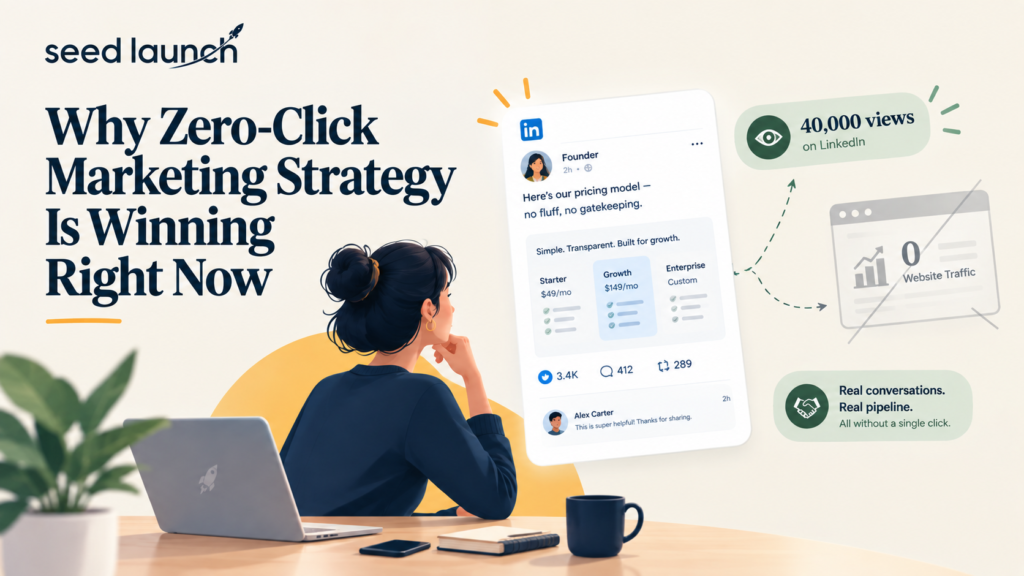
A few weeks ago, a SaaS founder posted her pricing breakdown on LinkedIn. No link. No call to action. Just the full answer, laid out right there in the post.
That one post got 40,000 views and a few hundred comments. Her website traffic barely moved that week.
Nothing went wrong here. This is what a zero-click marketing strategy looks like when it works. The post did its job before anyone had to click anywhere else — because the click was never really the point.
Why Buyers Stopped Clicking Through
For years, marketing worked like this: get someone off the platform they’re on, and onto yours. Click the ad, land on the page, fill out the form. That only works if people are willing to leave what they’re doing to go find an answer somewhere else.
Most people aren’t willing to do that anymore. Google now answers a lot of searches right there on the results page — SparkToro’s research puts the current zero-click rate at around two-thirds of all Google searches, so most people never even reach a website. LinkedIn and X work the same way: they keep people scrolling, not clicking away. People read the post, watch the video, or skim the breakdown, and they decide what they think of you without ever visiting your site. A zero-click marketing strategy isn’t some clever workaround for this. It’s just what marketing looks like now, given how people actually spend their time.
What a Zero-Click Marketing Strategy Actually Requires
Here’s where a lot of founders get it wrong. They hear “zero-click” and think it means less work — no landing page, no funnel. It’s actually the opposite. When the post itself is the whole experience, it has to do everything your website used to do: show proof, show personality, and give people a reason to trust you, all in one place.
That means choosing one channel where your buyers already hang out, and going deep there instead of spreading yourself across five platforms. It means actually giving the answer, not teasing it to earn a click. A post titled “5 Mistakes Killing Your Series A Pitch” that never names the five mistakes isn’t a zero-click strategy — it’s just an ad pretending to be helpful. The founders who are winning at this treat the post itself as the product, not as bait to get somewhere else.
Why This Matters More for AI and SaaS Founders Specifically
Buyers are already skeptical, and AI has made that worse. People have clicked into enough thin landing pages that promised a real framework and turned out to be an email form in disguise. A zero-click strategy skips that whole trust problem, because you’re showing you know what you’re talking about before you ask for anything at all. If you’re a seed-stage AI or SaaS founder with no name recognition yet, that’s often the fastest way to earn trust — faster than any paid ad could.
There’s a real trade-off, though. It’s harder to measure, and it won’t show up cleanly in your website analytics. But pipeline that comes from someone who’s been reading your posts for months tends to close faster than pipeline from a cold form fill, simply because the trust is already there by the time you talk.
You don’t need to give up on your website. You just need to stop treating it as the only place people are allowed to hear from you. If your content still assumes someone has to click before they’ll believe you, that’s the gap worth closing first.
If you’re not sure which channel deserves that kind of attention, check out this page on demand generation — it’s built around exactly this shift. And if you’d like help building a strategy around where your buyers actually spend their time, book a Scale call.