
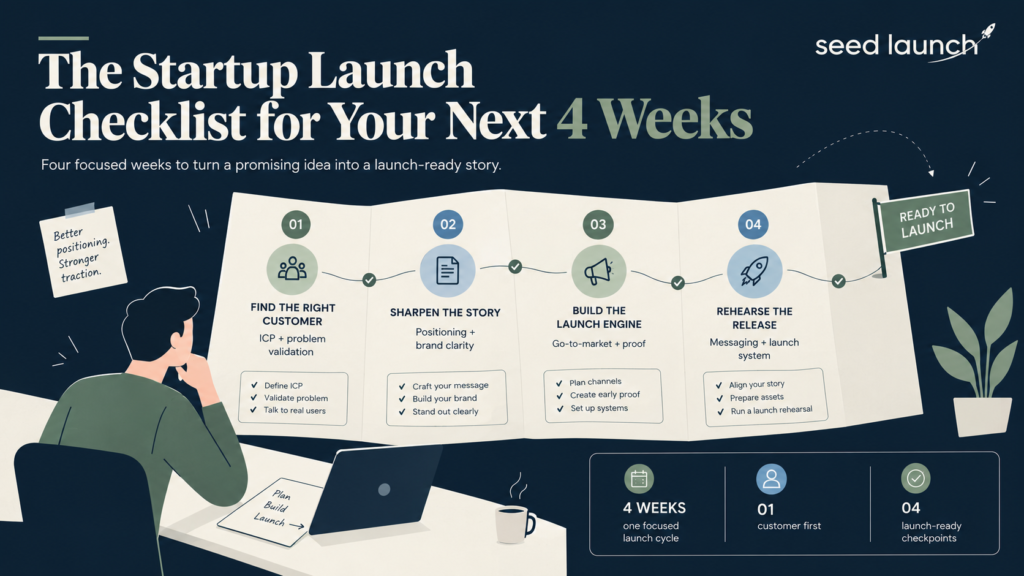
“Four weeks isn’t enough to build a company, but it’s enough to fix the four things that decide if your launch works.”
This AI startup launch plan turns four weeks into total clarity — the four things that decide if your launch works.
“Your Saas Launch Plan:Four Weeks , Four Fixes”
Four weeks out. Demo booked. Product working.
And nobody on the six-person team could say, in one sentence, who it was for.
Marketing had one answer. Sales had another. The founder’s pitch deck had a third. Four weeks from launch, and the company still didn’t agree on its own customer.
This isn’t rare. In fact, it’s the default, because building eats every hour, and “who exactly is this for” gets pushed to later. As a result, launch day has a way of collecting on that debt.
Four Weeks Won’t Build You a Company.It’ll Fix Four Things.
Be honest about what four weeks buys you. Not a stronger product. Not demand out of thin air. What it can buy — if you spend it on purpose — is clarity on the four things that actually decide a launch: who you’re selling to, what you’re saying to them, how that turns into a go-to-market motion, and where you’ll find your first customers.
Most teams spend pre-launch polishing the product and writing copy nobody’s tested. But that’s backwards, because the product is usually further along than the positioning.
Week One: Clarify — Name the Buyer, Not the Market
“Small businesses” isn’t a customer. “Operations leads at 20-to-75-person logistics companies still scheduling drivers by spreadsheet” is a customer. So talk to five to eight of them. Real calls, fifteen minutes, not surveys. You’re listening for their exact words, since those become your homepage copy in week two.
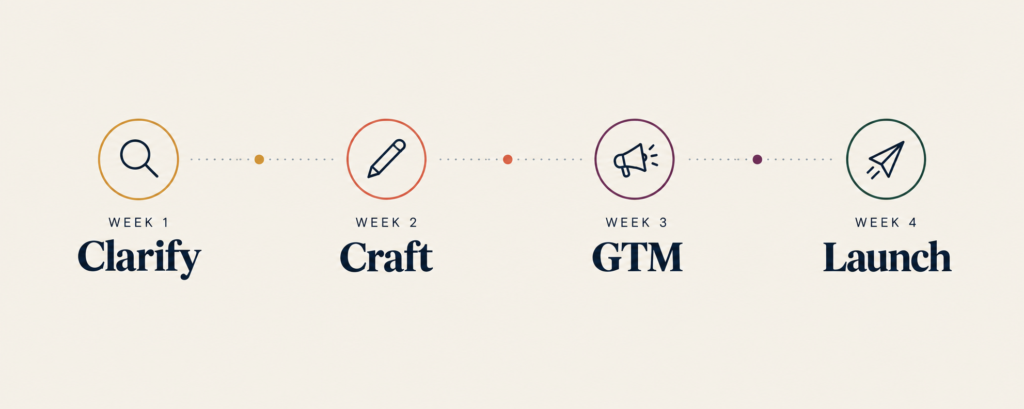
Week Two: Craft — Kill the Positioning That Sounds Like Everyone Else’s
Put your homepage next to two competitors’. Logos covered. Can a stranger tell which is which? If not, that’s not positioning — it’s a template. Instead, write one sentence: who it’s for, what changes for them, why now. Then test it on five people who’ve never seen the product. If they repeat it back in their own words, it works. If they nod and change the subject, it doesn’t.
Week Three: GTM — Pick One Channel and Commit
Founders love launching everywhere — LinkedIn push, Product Hunt drop, cold email, a podcast tour. But spread four weeks across five channels, and you learn nothing about any of them. So pick the one where your buyer already spends time, and put the whole week there. You can add channels after launch, once you know what converts.
Week Four: Launch — Ship, Then Watch the Right Number
Launch week isn’t about traffic. It’s whether the five or eight people from week one — and whoever they referred — actually use the thing and come back. That signal, however small, beats a thousand anonymous visitors.
Why This Matters More Now
Buyers are more skeptical than ever, and the data backs that up: a 2026 TrustRadius industry survey found that 94% of B2B buyers now fact-check AI-generated claims before trusting them. In other words, a confident pitch no longer closes the gap the way it used to — buyers verify everything themselves. Meanwhile, capital’s tighter, so a launch that fizzles doesn’t just cost momentum — it costs runway you don’t get back. As a result, the startups landing customers and seed rounds right now aren’t the ones with the flashiest features. They’re the ones who can say, specifically, who they’re for and why now.
Four weeks is short. It’s also exactly enough time to stop guessing.
If you want the week-by-week checklist behind this SaaS launch plan — the interview script, the positioning test, the channel-pick framework — grab the free 4-Week Launch Checklist on SeedLaunch.co.
If you want to see the full 4-week sprint this post is built on, check out the Launch page. And if Week 3 is where you’re stuck, take a look at the Go-To-Market solution for building out your channel strategy.
#Seed Launch #Positioning #Product Market Fit #Ideal Customer Profile #Founder Narrative #Demand-Generation #Contact